Trusting AI alone? That’s not bold. That’s reckless
- May 23, 2025
- 4 min read
Updated: Jun 24, 2025
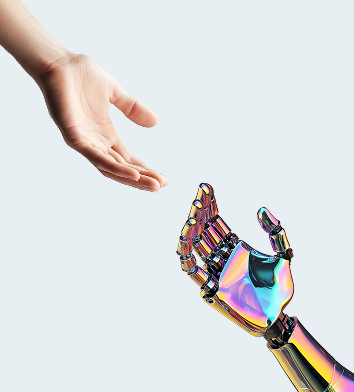
AI has become the world’s most confident intern.
It works fast, never sleeps, and talks like it knows everything. But press it on anything nuanced like legal ambiguity, medical context, or financial risk, and it stumbles. Worse, it doesn’t know when it’s wrong.
"That's not intelligence. That's risk wrapped in syntax." (Stochastic Parrots)
This creates a trust gap. One that shows up everywhere from customer service chats to enterprise agent deployments. And it raises a crucial question: Who's watching the machine?
What really goes wrong when AI works alone
In a sweeping study of ChatGPT failures, researcher Ali Borji categorized breakdowns into eleven areas—reasoning, factual errors, logic, bias, math, and more ("A Categorical Archive of ChatGPT Failures," Borji, 2023). In one case, ChatGPT asserted that 103 isn’t a prime number. In another, it confidently explained how to hotwire a car.
In research led by Saleema Amershi on interactive machine learning, users interacting with AI systems reported frustration when they couldn't influence the system's behavior or understand its logic ("Power to the People: The Role of Humans in Interactive Machine Learning," Amershi et al., 2014). The result: diminished trust, higher abandonment rates, and increasing reliance on disclaimers instead of answers.
So, as you can see, these risks span everything from basic math errors and flawed logic to deeply embedded bias, fabricated facts, and a lack of accountability that leaves users misinformed and unsupported. The foundational flaw in AI-only support is that when accuracy matters, AI alone isn't enough.
Turns out, the missing ingredient in AI support is the most obvious one: people
When AI encounters ambiguity, judgment calls, or high-risk queries, it should be designed to tap into verified human expertise. Humans can offer what AI fundamentally lacks: lived experience, ethical reasoning, and the ability to weigh context in ways that are not preprogrammed. Only a human can recognize when rules do not apply cleanly, when empathy matters more than accuracy, or when the answer is not just what is true but what is responsible. The goal should be to build AI systems that escalate to a real person who can deliver a responsible, context-aware, and trustworthy answer that AI alone cannot guarantee.
The people providing this layer of trust and accountability should be real professionals. Licensed experts and domain specialists with firsthand knowledge, decision-making experience, and the qualifications to stand behind what they say. Doctors, lawyers, mechanics, and more can bring credentials, context, and accountability to AI workflows as on-demand resources.
This model should reduce risk and build confidence by giving customers answers they can trust from people with the expertise to stand behind their work.
Learning together: the value of interaction
Saleema Amershi and colleagues underscore the power of rapid, human-in-the-loop learning cycles in Power to the People: The Role of Humans in Interactive Machine Learning, Amershi et al., 2014. In their research, users trained a simple image model by showing which parts of a picture belong together, like highlighting the sky versus the ground with color. Each correction updated the system instantly, helping guide it toward the right result.
Another system they tested let people connect physical gestures to sounds. Subjects waved their arm to trigger a note. As they moved, they could instantly hear how the system reacted and adjust their input to get the result they wanted.
Both experiments proved a simple idea: when people can interact with AI in real time, the system improves faster, and trust builds naturally.
This same principle can apply to customer service. AI agents can handle common requests, while human Experts should step in for nuance, risk, or judgment calls. Over time, AI can learn what to escalate and when, blending speed with human insight.
The infrastructure behind the handoff
To put these ideas into practice, you need infrastructure built for AI and human collaboration.
Pearl's MCP Server is a system designed to seamlessly connect AI agents with real, vetted Experts—at the right moment, in the right context. That means when an AI model hits a limit, it can escalate the conversation, transfer context, and bring in human backup without losing the thread.
Built on a scalable, stateful architecture using Cloudflare Workers, the MCP Server handles:
Real-time Expert routing
Conversation context management via Durable Objects
Scoped authentication and security via OAuth
It also supports tools like askExpert, askPearlAI, and getConversationStatus, giving developers the building blocks for intelligent escalation and seamless verification.
Integration is straightforward. The Pearl API works with Claude, Cursor, LangChain, OpenAI, and most modern agent frameworks, which makes it easy to add real humans to even the most advanced AI stack.
The future is AI + human
As the "Stochastic Parrots" paper warns, AI can simulate language, but it cannot simulate understanding. That gap becomes dangerous when users take answers at face value.
Pearl’s model closes that gap. With real-time Expert verification, customers get fast help they can trust. Businesses get lower risk, higher satisfaction, and a future-proof AI stack.
Want to build an AI that knows when to ask for help?
Start with Pearl.


Comments